The Climate Crisis
The world emits approximately 51 billion tonnes of greenhouse gases annually. Impacts are accelerating faster than adaptation capacity, and the communities least responsible are absorbing the sharpest shocks.
The challenge
The challenge is not a lack of funding — it is a failure of delivery.
< 4%
Africa's share of global greenhouse gas emissions
250M+
Africans facing increasing climate vulnerability
600M+
People without reliable electricity
~400M
People without safe drinking water
The world emits approximately 51 billion tonnes of greenhouse gases annually. Impacts are accelerating faster than adaptation capacity, and the communities least responsible are absorbing the sharpest shocks.
Global climate finance exceeds USD 1.9 trillion annually, yet less than 10% reaches local actors directly and less than 0.2% supports locally led initiatives. Intermediaries absorb cost, time and decision-making power.
Africa contributes less than 4% of global greenhouse gas emissions yet suffers disproportionately from droughts, floods, ecosystem degradation, food insecurity and water scarcity. More than 250 million Africans face increasing climate vulnerability.
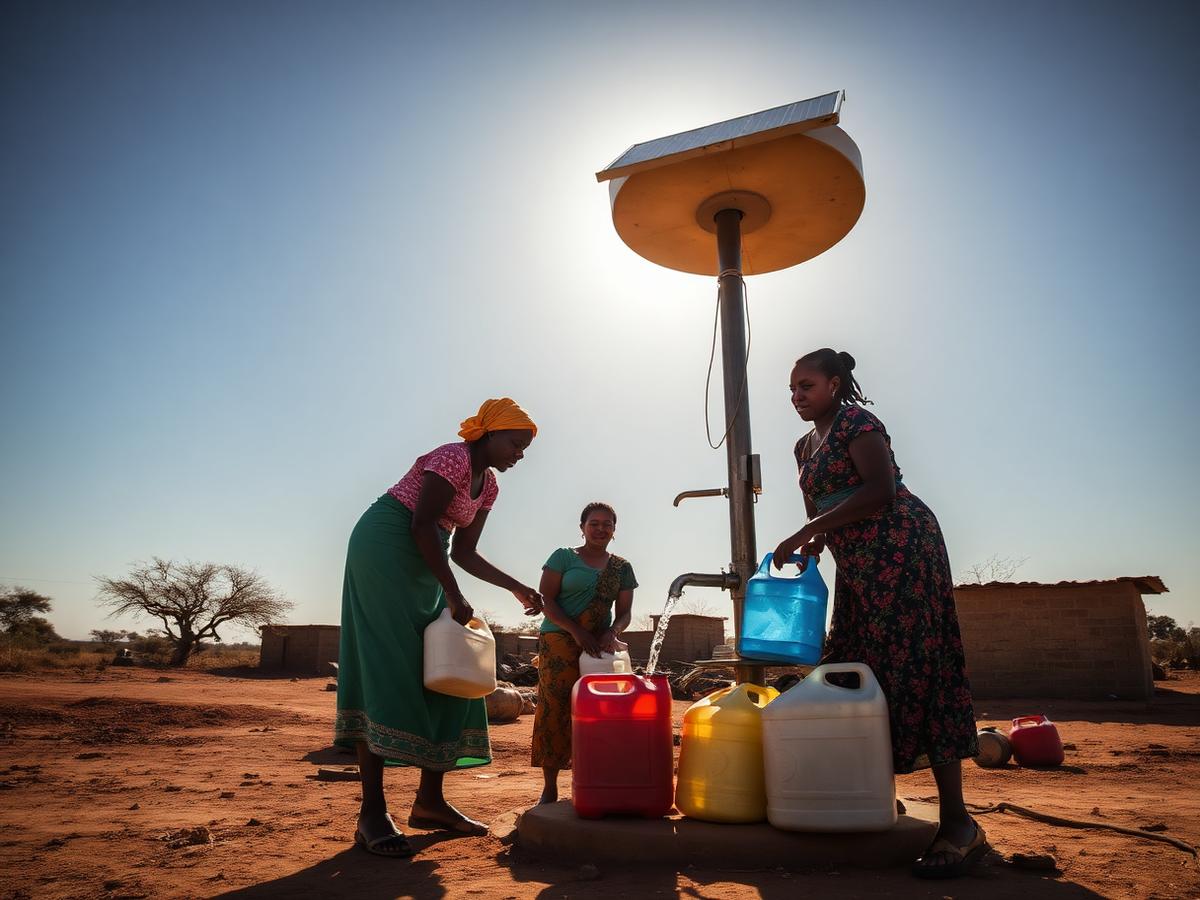
Kenya faces recurring drought in its arid and semi-arid lands, flooding in its basins, degraded watersheds and coastal ecosystems under pressure — while county-level institutions and community groups remain chronically under-financed.
Communities hold the knowledge, the incentives and the presence to sustain climate solutions. When they also hold the finance and the decisions, adaptation outlasts the project cycle.
The delivery failure
Finance stalls in capitals and intermediaries. Communities receive short-cycle projects instead of permanent institutions — so resilience disappears when the grant closes.
Fund a Community Climate Finance Hub, partner with communities, or contribute expertise to locally led adaptation.